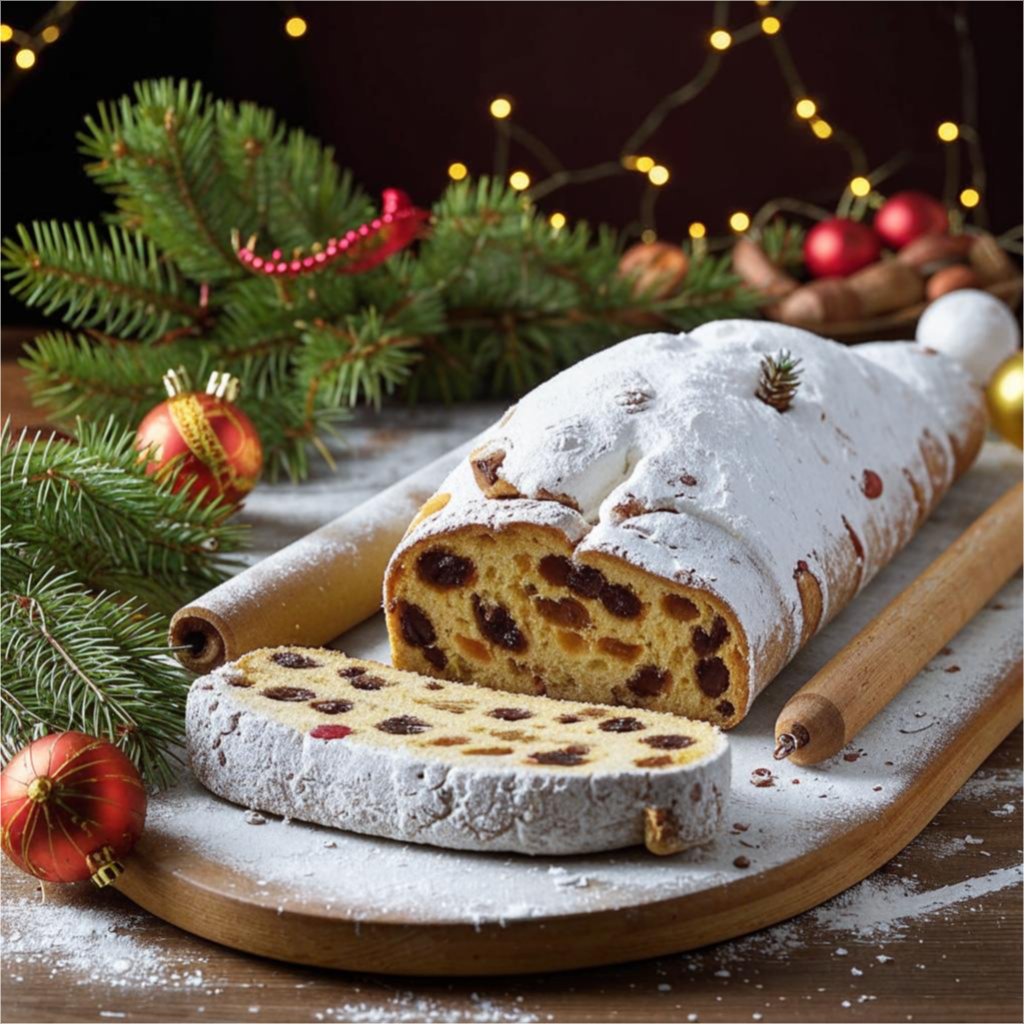
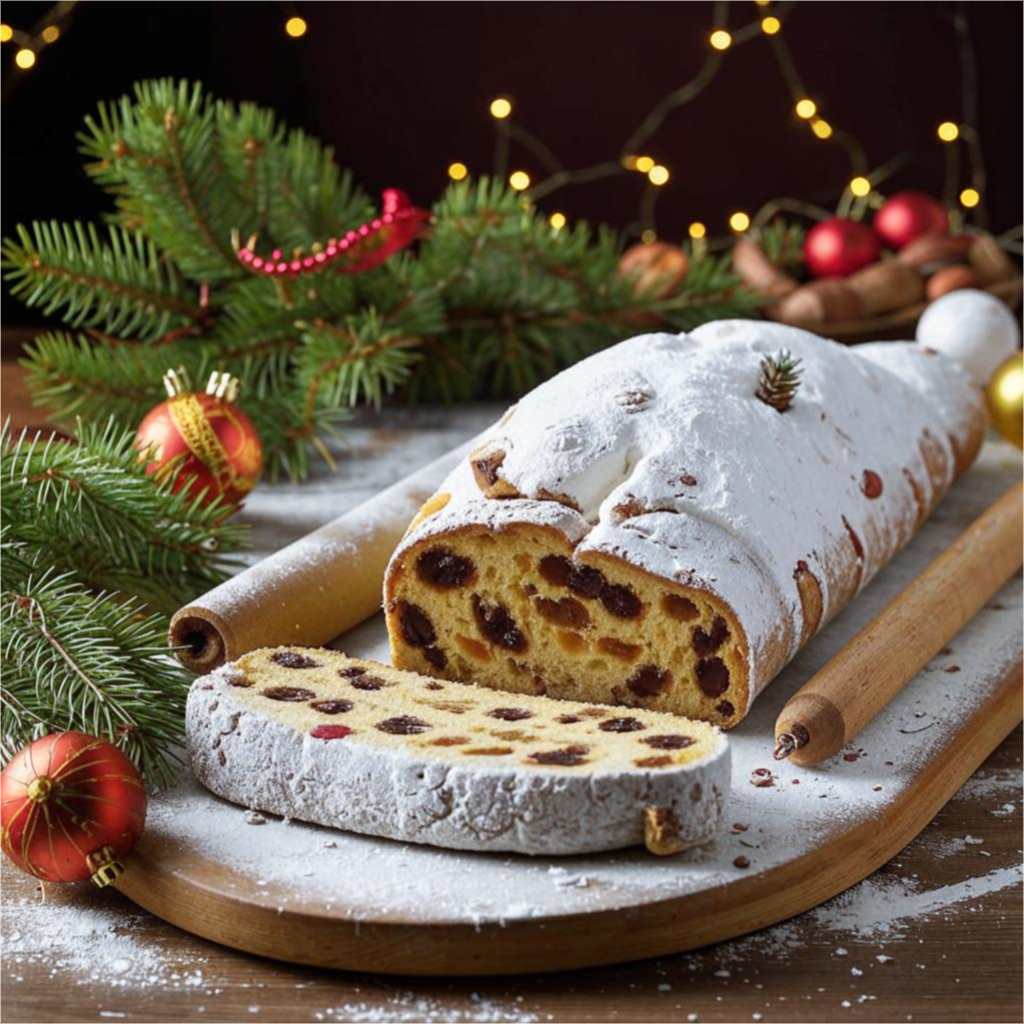
Stollen is a traditional Christmas cupcake that is associated with the holiday and the warmth of the hearth. This dessert, rich in fruits, nuts and spices, has a long and interesting history dating back to the Middle Ages.
The origin of the stollen
The history of Stollen begins in Germany, where it first appeared in the XV century. This dessert originated in Dresden, and its predecessor was a simple lean bread made from flour, water and yeast. At that time, the church strictly regulated the use of butter and milk in baking during the lent period. Therefore, the first stolens had a more modest taste.
However, in 1491 the situation changed. The Saxon electors appealed to Pope Innocent VIII to allow the use of oil in the stollen. After long negotiations, the pope issued the so-called “Butter Message” (Butterbrief), which allowed the addition of oil, but only for the payment of a special tax. This decision gave rise to the evolution of stollen into its richer and more satisfying version.
Symbolism and form
The stollen has the characteristic shape of an oblong loaf with a bulge on one side, which symbolizes the baby Jesus wrapped in shrouds. A sprinkle of powdered sugar enhances this symbolism, resembling white shrouds.
Dresden Stollen
By the 16th century, Stollen became a symbol of Christmas, and Dresden became its “capital”. In 1730, the Saxon Elector August the Strong ordered a giant stollen weighing about 1.8 tons for the celebration. It took hundreds of bakers and special kitchen tools to make it.
Modern stollen
Modern stollen recipes include butter, dried fruits, almonds, candied fruits, spices and, sometimes, marzipan. It remains a popular Christmas dessert, known far beyond the borders of Germany.
Every housewife or baker can add their own “touch” to the stollen, giving it a unique taste. However, its status remains unchanged as a symbol of the holiday, uniting family and friends at the table.
Interesting facts about stollen
Stollen is traditionally baked a few weeks before Christmas so that it has time to “ripen”. The longer it is stored, the richer its taste becomes. The Stollen Festival is held annually in Dresden, where bakers present their best products. The historical giant stollen of August the Strong was cut with a special knife 1.6 meters long.
Stollen is more than just a dessert. It is a symbol of Christmas traditions, which takes us into a story filled with the aromas of spices, the warmth of family and the comfort of a winter evening. After tasting a piece of stollen, you will not only enjoy its taste, but also touch the rich cultural heritage.







 eWEErything
Leave a comment