
Interesting Areas to Live in Dubai
Hey there! My name is Anton Sizemin, I relocated to Dubai for business a year ago and was immediately faced with the problem of residence. During my time in the city, I have tried six different places to live.
Why six locations in a single year and what exactly is this kaleidoscope of places? Normally, I am quite conservative and, when settled, can stay in one location for years. But Dubai intrigued me and I decided to explore different areas to test them out and experiment. It was my first experience living in a Middle Eastern country and abroad in general, with a hot desert climate near a large body of water.
Since I rented various places to live, I wrote an article, entitled My 6 Dubai Locations in 365 Days: Renting Tips and Nuances ,where I delve into the nuances of renting. Here, I’ll focus on some interesting neighborhoods for living in Dubai.
On the map, Dubai looks like a small city, but in reality, it’s a sprawling metropolis divided into large, non-intersecting districts (forget about leisurely strolls between them), with wide roads and long distances between above-ground metro stations.
This setup makes transportation crucial. Dubai’s transport system is well-developed and logically starts with the airports. There are two airports in the city (you can also use Sharjah Airport [SHJ] or Abu Dhabi Airport [AUH], which is 75 km from Dubai and easily accessible by bus [around AED 70] or taxi [around AED 250, slightly more for the return trip]). Dubai’s main airport is DXB, a major transportation hub and the Al Maktoum Airport is poised for growth, with plans for Emirates flights to relocate there in the future.
One of the most popular forms of transport in Dubai is taxis. You can order one through apps like Yango, Careem or Uber. You can also flag one down right on the street. All yellow taxis (distinguished by different roof colors, indicating the taxi company) are city taxis with meters, clear rates and stable fares. If you use an app, you’ll also get full transparency on pricing.
Dubai’s above-ground metro system is convenient, reaches many areas and is a city landmark. The metro is fully automated—you can even sit at the front of the train and watch the journey from the “driver’s seat”. It transports a large number of passengers daily. There are also big plans to expand the metro network further to new areas that are either already developed or currently under construction.
Local and inter-district transportation is provided by buses. Buses move efficiently between stops according to a schedule, which can be tracked using designated apps. Many bus stops are air-conditioned, which is a great convenience in the summer. Buses are a popular form of public transport.
There is also a tram line in Dubai. Trams operate in the Dubai Marina area, taking tourists to the popular Jumeirah Beach and along the coastline towards Palm Jumeirah, where you can transfer to the monorail and ride it to the famous waterpark at the tip of the Palm. The tram also stops at Al Sufouh Beach (closed in 2023, though many expect it to reopen as one of Dubai’s most popular beaches).
Public transportation in Dubai is well-developed and it’s easy to rent a car as well. However, after becoming a resident, you’ll need to get a local driver’s license—a topic for another article. If you are in the market for purchasing a car, the offers are endless, both new models and pre-owned ones.
Dubai is expanding both along the coastline (with massive planned developments around Al Maktoum Airport and a new palm district) and further inland (areas like Damac Hills and metro expansion plans). Despite its size, the city’s geography is quite simple. The coastline stretches with artificial formations (like Palm Jumeirah and the Marina) and new districts both deeper into the desert and along the shore. You can rent housing in any of these areas and I cover it in my article My 6 Dubai Locations in 365 Days: Renting Tips and Nuances.
On one side, Dubai is smoothly transitioning into the neighboring emirate of Sharjah, so much so that you barely notice the border, while on the other side is the highway leading towards Abu Dhabi, the UAE’s capital, where there is room for future development (like the construction around Al Maktoum Airport and the planned, though currently empty, second Palm district).
My journey in Dubai began in the Al Barsha district, which is near our office and naturally was chosen as my starting point. I spent a few months in a hotel room at Hampton by Hilton. The booking and payment process was simple, with prices following the market and season and discounts available for extended stays. Despite being a chain hotel, like in many places in the Middle East, bargaining is expected and necessary. What stood out to me were the room cleaning service and the included (if needed) breakfast.
Al Barsha is memorable for its location—the famous Mall of the Emirates is here and the district is situated between Business Bay and Dubai Marina, where most of my business meetings took place. This is a truly Middle Eastern neighborhood, in the broad sense of this expression, representing nationalities from across the Middle East and North Africa. I really enjoyed the atmosphere of the area, the abundance of Lebanese restaurants, the convenient transport and a few authentic Irish pubs.
Dubai Marina Apartments
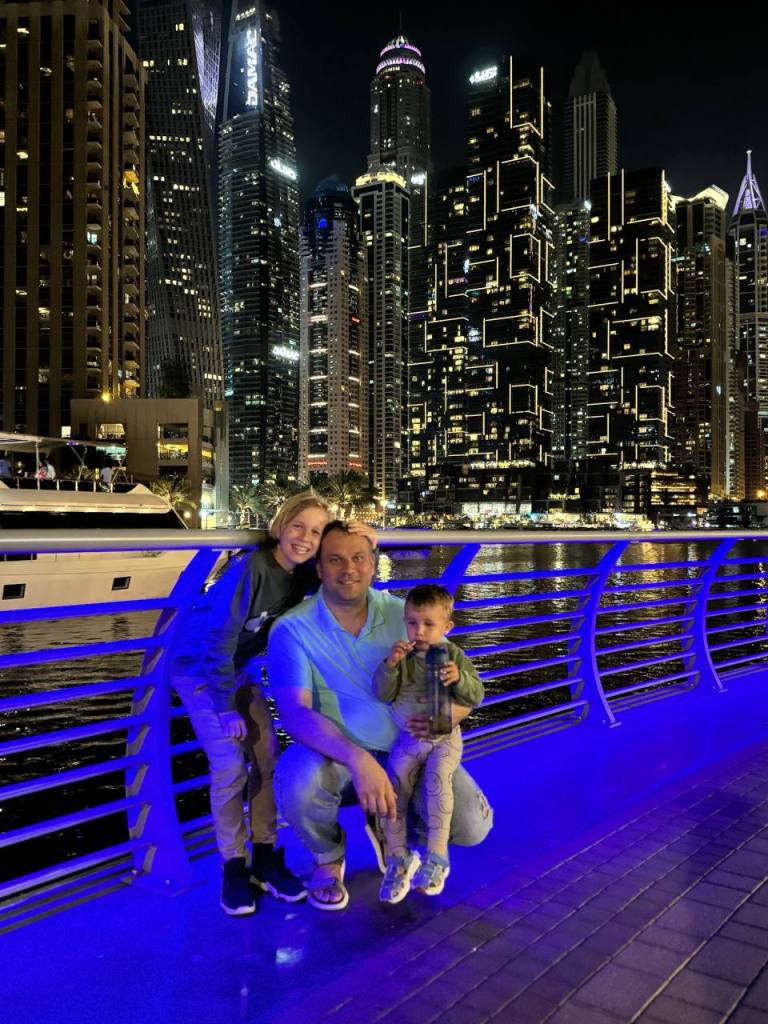
As the season began, I moved to the Dubai Marina district. Once I got settled, my wife and child joined me and staying in a hotel room became impractical. Dubai Marina is a fantastic waterfront area. The apartments here were impressive with their spaciousness, high ceilings and quality furniture. The reception staff were always friendly, although they initially tried to place me on the second floor facing a blank wall, but eventually, we reached an understanding and I moved to a higher floor with a great view of the entire area. I also spent several months in Princess Tower, one of the tallest buildings in the district. The stunning view of the Ferris wheel and the high floor were breathtaking, especially since this was my first experience living long-term in such a tall building. Living on a high floor is interesting, but over time the view becomes static and frankly, a bit boring.
Tulip Al Barsha
For the summer, I decided to stay closer to the office and returned to Al Barsha. The local network called Tulip had a good offer and I took advantage of it. The apartment was on the second floor, providing a nice change from living in a skyscraper. Life was buzzing around me and I felt very much a part of it.
Mag 218
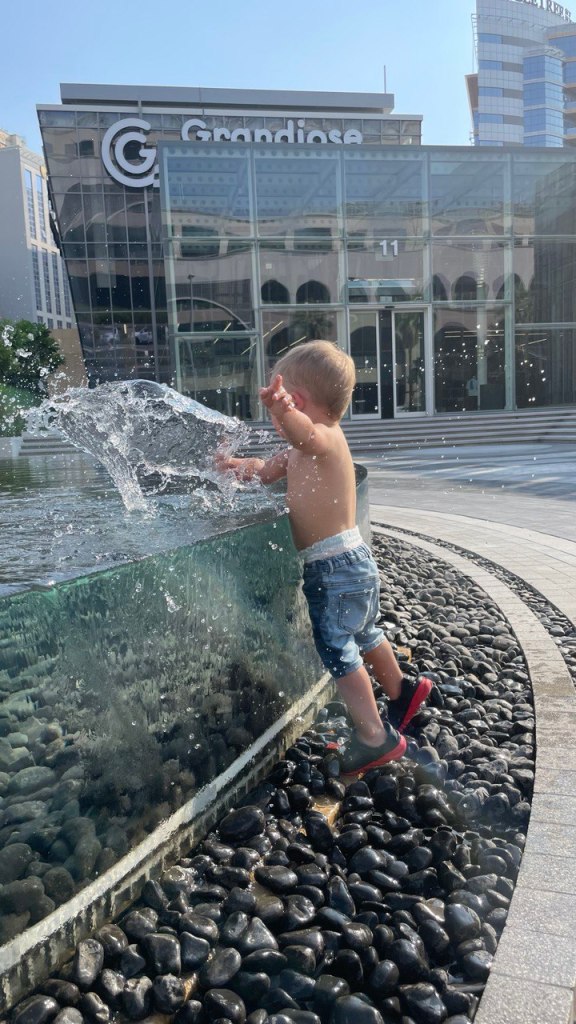
As the new season approached, I returned to Dubai Marina and stayed in a building called Mag 218, on the 51st floor. This has probably been the best building I have lived in during my time in Dubai so far. The service within the building was excellent and the neighbors were pleasant. The gym was standard (fitness centers are almost always included in Dubai buildings), but I was pleasantly surprised by the pool—a whopping 25 meters, one of the longest in the area—and the children’s playground, which was air-conditioned. I started searching for a long-term rental and found an apartment in the same building, but on the third floor. Moving to a lower floor had its benefits—I reconnected with the dynamic life of the area, losing the breathtaking but static view of nighttime Dubai.
Areas in Dubai
There are plenty of interesting neighborhoods to live in Dubai. Russian speakers, for example, tend to prefer Palm Jumeirah, Dubai Creek, Dubai Marina and Dubai Hills.
Dubai Hills has fantastic villas, surrounded by greenery and a neighboring golf course. The area also features low-rise apartment buildings. At the center of the district lies a large green park and one of Dubai’s most interesting shopping centers—Dubai Hills Mall. The mall’s well-thought-out concept and the presence of popular stores make it a major attraction and positively influence the quality of life in this area.
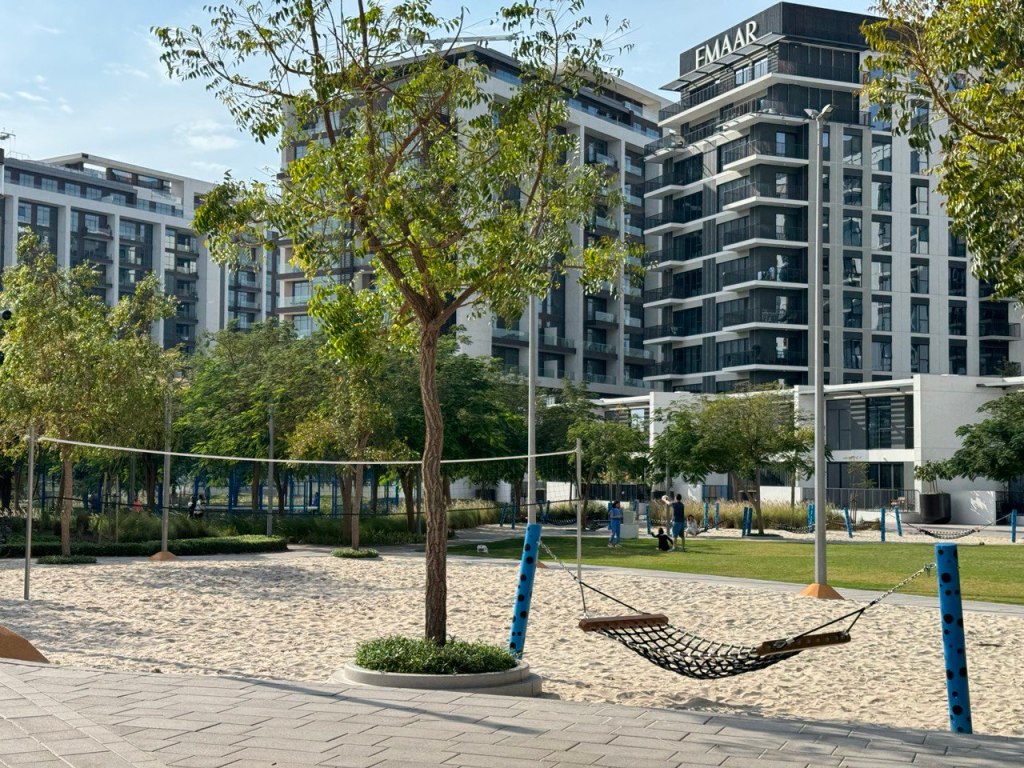
Dubai Creek is located close to the business center and the airport, making it an excellent, quiet, European-style district with great transport accessibility.
Palm Jumeirah is primarily about access to the water. It offers the opportunity to live on a picturesque beach while still having access to the city’s infrastructure. On the Palm, you can choose between villas or apartments in multi-story buildings. Nearby, there are many restaurants and at the center of the Palm is the well-known Nakheel Mall. As I mentioned earlier, a monorail runs along the trunk of the Palm, connecting the coastline (where you can transfer to the tram) to Atlantis Waterpark (part of the famous and record-breaking hotel).
Dubai Marina is known for its high-rise buildings and well-developed infrastructure, with many restaurants and an active nightlife (or rather, evening life). At the Marina docks, you can rent yachts for various group sizes or take the city routes to cruise through the Marina, not just for leisure but also to get from one part of the district to another, all for just 6-10 AED. At the center of the district lies the Dubai Marina Mall. Meanwhile, the metro and Jumeirah Beach are connected by a tram. A pedestrian walkway runs along the beach and by crossing the pedestrian bridge, you can explore the Bluewaters Bay area, home to one of Dubai’s iconic landmarks—the world’s tallest Ferris wheel.
Despite being a tourist zone, there’s a lake just across the road (near the CNN office), where you’ll find only a few locals walking their pets. It’s a beautiful and peaceful spot for evening strolls.
Across Sheikh Zayed Road from Dubai Marina you can find JLT (Jumeirah Lake Towers), a modern, high-rise district designed in one architectural style. At the center is an artificial lake with greenery. Since the district is located farther from the coastline, you can still enjoy evening walks in Dubai Marina, have good access to transportation and benefit from slightly lower rental prices.
The Persian Gulf Coastline, stretching from Palm Jumeirah to Dubai Port (which covers almost the entire length of the city), features a mix of public city beaches and private hotel beaches. This area, from the beach to Sheikh Zayed Road, consists of low-rise buildings, creating a “single-story Dubai” atmosphere. The region is filled with schools, nurseries and development centers, as well as some of the best cafes and many excellent restaurants. There are 24-hour beaches with lighting and their own boardwalks, creating a unique atmosphere of coziness and comfort. Simply being here is a pleasure. This area is also home to the world-famous Burj Al Arab, along with several equally premium hotels (you can visit the restaurants in these hotels for no additional fee, stroll along the beach or pay for a day pass to enjoy all the hotel amenities).
Dubai continues to grow, with new neighborhoods featuring interesting concepts (developers are creating comprehensive plans to attract buyers).
One area that stands out to me is Investment Park, located near the Expo 2020 Exhibition Center and Al Maktoum Airport. This is a true suburban district, with low-rise buildings, wide avenues, excellent transport accessibility, lots of greenery and great infrastructure. It’s possible that after the surrounding areas are developed, it might become busier, but for now, it remains a quiet and idyllic place to live.
The city is becoming increasingly diverse, offering residents numerous opportunities for a comfortable life!Dubai continues to actively develop, attracting people from all over the world with its unique districts and high quality of life. Using modern services for finding housing simplifies the process of renting or buying property, making it easy to quickly find the right option. You can rent housing in any of these neighborhoods and I’ve covered the nuances of renting in my article My 6 Dubai Locations in 365 Days: Renting Tips and Nuances. Dubai is a very attractive place to live. Which Dubai district do you like the most? Share your thoughts in the comments! If you need more information or have other questions, feel free to ask, I’ll gladly answer all of your questions.





 eWEErything
Leave a reply to My 6 Dubai Locations in 365 Days. Renting Tips and Nuances – eWEErything Cancel reply